
Silicate Paint vs Acrylic Paint The Ultimate Guide for Architects & Homeowners

In modern architecture and residential design, building a home goes far beyond surface aesthetics. Today, the true measure of a great building lies in the well-being of its occupants and the long-term sustainability of its structure.
Because of this shift toward Green Building standards, architects and homeowners are taking a closer look at surface finishes. One material gaining massive traction is Pure Silicate Paint (commonly known as Mineral Paint).
However, many still wonder: How does natural silicate paint differ from traditional acrylic paint? Why is there a price difference, and which one is actually the better long-term investment?
In this guide, we dive deep into the chemical mechanisms, technical properties, and life-cycle costs to help you make the best decision for your next project.
1. What Is the Difference? Understanding the Core Chemistry
To understand why these two paints perform so differently, we need to look at their chemical compositions and bonding mechanisms.
Traditional Acrylic Paint (Chemical / Emulsion Paint)
Most standard wall paints are petrochemical-based acrylic emulsions that rely on synthetic acrylic resin as a binder.
-
How It Works: When applied to a concrete wall, the water or solvent evaporates, leaving behind a thin plastic film. This film sticks to the surface purely via physical bonding—much like placing a sticker or plastic wrap over a wall.
Pure Silicate Paint (100% Mineral Paint)
Pure Silicate Paint has a rich architectural heritage in Europe. Formulated from potassium silicate (liquid potassium glass) and natural inorganic pigments, it is a 100% natural, mineral-based paint.
-
How It Works: Silicate paint does not create a surface plastic film. Instead, it undergoes a permanent chemical reaction called petrification (or silification). The potassium silicate reacts directly with the calcium in raw concrete, plaster, or masonry, bonding fuse-like into the building structure itself.
2. Technical Comparison Matrix
For architects evaluating material performance and homeowners seeking clarity, here is how the two compare side-by-side:
| Feature | Pure Silicate Paint | Traditional Acrylic Paint |
| Primary Composition |
Potassium Silicate + Natural Minerals |
Petrochemical Acrylic Resins |
| Bonding Type |
Chemical Bond (Fuses into substrate) |
Physical Bond (Plastic film coating) |
| Vapor Permeability |
Very High ($SD\{-Value} < 0.02\{ m}$) |
Low (Blocked by plastic film) |
| Lifespan |
20 – 50+ Years (No peeling) |
5 – 10 Years (Subject to film degradation) |
| UV Resistance |
Extreme (Inorganic pigments won’t fade) |
Moderate to Low (Chalking and fading over time) |
| Eco-Friendliness |
Highest (Zero VOCs, Zero Microplastics) |
Contains VOCs and synthetic resins |
| Mold & Algae Protection |
Natural high-alkaline defense ($\{pH } 11\{–}12$) |
Relies on chemical biocides (Degrades over time) |
3. The Architect’s Perspective: Engineering Sustainable Structures
Architects look beyond handover day; they design for sustainable architecture and minimized life-cycle maintenance costs.
A. Moisture Control & The “Breathable Wall”
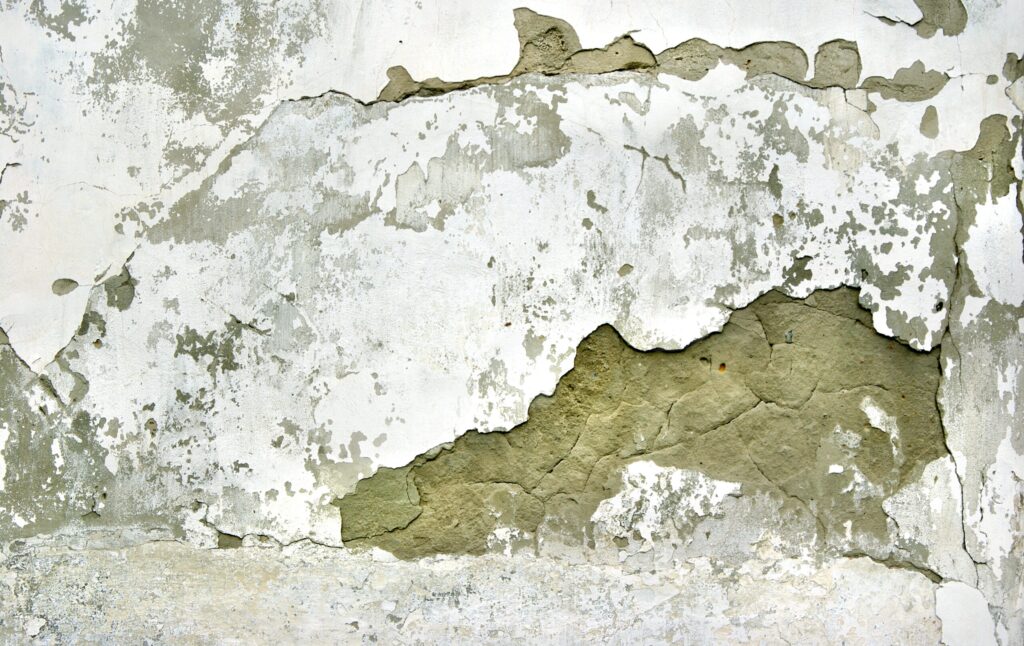
Peeling paint caused by trapped moisture (such as rising damp or seasonal rainwater) is one of the most frustrating architectural challenges.
-
Acrylic Paint: Traps moisture beneath its plastic barrier. As vapor pressure builds up behind the film, it causes blisters, cracks, and eventual peeling.
-
Pure Silicate Paint: Features an open micro-porous structure. Water vapor escapes freely while liquid rain droplets are blocked from entering. This creates a breathable wall that keeps concrete dry, prevents internal rebar corrosion, and completely eliminates peeling.
B. Extreme UV Resistance & Color Stability
Harsh UV radiation breaks down the chemical bonds in acrylic paints, leading to fading and chalking within a few years. Pure silicate paint uses inorganic, mineral-based pigments that are unaffected by UV rays. The stable silicate bond keeps exterior facades vibrant, crisp, and fade-free for decades.
C. Meeting Green Building Standards (LEED, WELL, TREES)
Because pure silicate paint contains zero VOCs (Volatile Organic Compounds) and no toxic solvents, it easily qualifies for points in Indoor Environmental Quality and Materials & Resources categories under major green building certification programs.
4. The Homeowner’s Perspective: Health & True Long-Term Value
If you are building your dream home, paint selection directly impacts your family’s daily health and your long-term budget.
A. Healthy Indoor Air Quality (Zero VOCs)
Traditional paints release off-gassing chemicals (VOCs) that can cause respiratory irritation and headaches. Pure silicate paint contains no organic solvents or toxic additives. It is completely odorless and non-toxic, making it safe to move into immediately—ideal for households with children, elderly family members, or allergy sufferers.
B. Chemical-Free Mold & Bacteria Resistance
In hot, humid climates, mold and algae are constant battles. While acrylic paints add chemical biocides that wear off in 2–3 years, silicate paint is naturally alkaline ($\{pH } 11\{–}12$). This naturally harsh environment prevents mold, algae, and bacteria from growing—without adding toxic chemicals into your living space.
C. Calculating the True Life-Cycle Cost
While mineral silicate paint has a higher initial material cost than standard acrylic paint, it is significantly cheaper over time:
-
Acrylic Paint: Requires repainting every 5–7 years due to fading or peeling. Over a 30-year period, this means paying for labor, scraping, scaffolding, and materials 4 to 5 times.
-
Pure Silicate Paint: A single application lasts 20 to 30+ years without peeling. The overall Total Cost of Ownership (TCO) is vastly lower, delivering substantial long-term savings.
5. Important Limitations to Keep in Mind
To ensure optimal application, architects and contractors should note a few key constraints:
-
Inorganic Substrates Only: Silicate paint needs calcium to bond chemically. It can only be applied directly onto bare concrete, plaster, brick, or masonry. It cannot be applied directly over old acrylic paint, wood, metal, or plastic without specialized surface primers.
-
Natural Mineral Aesthetic: Color options lean toward elegant, soft earth tones and classic European matte finishes. High-gloss, neon, or ultra-bright synthetic colors are not available due to the natural pigment base.
-
Requires Skilled Application: Because the paint absorbs into the substrate immediately, application requires proper surface preparation and skilled craftsmanship to ensure an even, flawless finish.
Conclusion: Which Paint Should You Choose?
-
Choose Traditional Acrylic Paint if: You need highly vibrant synthetic colors, are applying paint over non-masonry surfaces (like wood or mixed materials), or are working with a tight immediate budget and don’t mind repainting in 5 years.
-
Choose Pure Silicate Paint if: You are an architect designing a long-lasting masterpiece, or a homeowner building a healthy, non-toxic environment for your family. It is the ultimate choice for those who value low maintenance, structural longevity, and sustainable living.
Choosing natural mineral silicate paint is more than just picking a wall color—it is an investment in a safer, more sustainable, and timeless architectural space.